USS Forrestal (CV-59)
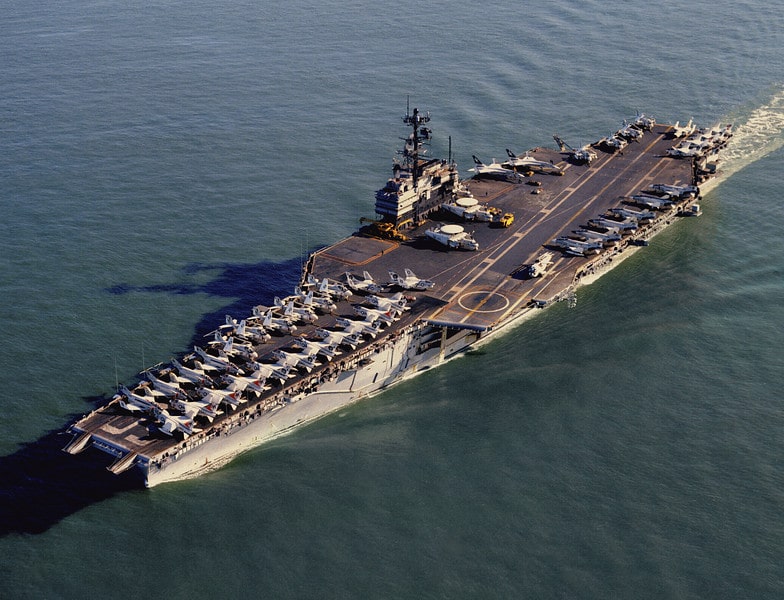
USS Forrestal (CV-59) (later CVA-59, then AVT-59), was a supercarrier named after the first Secretary of Defense James Forrestal. Commissioned in 1955, she was the first completed supercarrier, and was the lead ship of her class. Unlike the successor Nimitz class, Forrestal and her class were conventionally powered. The other carriers of her class were USS Saratoga, USS Ranger and USS Independence. She surpassed the World War II Japanese carrier Shinano as the largest carrier yet built, and was the first designed to support jet aircraft.
The ship was affectionately called "The FID", because her namesake was the first Secretary of Defense, FID standing for "First In Defense". This is also the slogan on the ship's insignia and patch. She was also informally known in the fleet as the "USS Zippo" and "Forest Fire" or "Firestal" because of a number of highly publicized fires on board, most notably a 1967 fire in which 134 sailors died and 161 more were injured.
Forrestal served for nearly four decades in the Atlantic, Mediterranean, and Pacific. She was decommissioned in 1993, and made available as a museum. Attempts to save her were unsuccessful, and in February 2014 she was towed to Brownsville, Texas, to be scrapped. Scrapping was completed in December 2015.



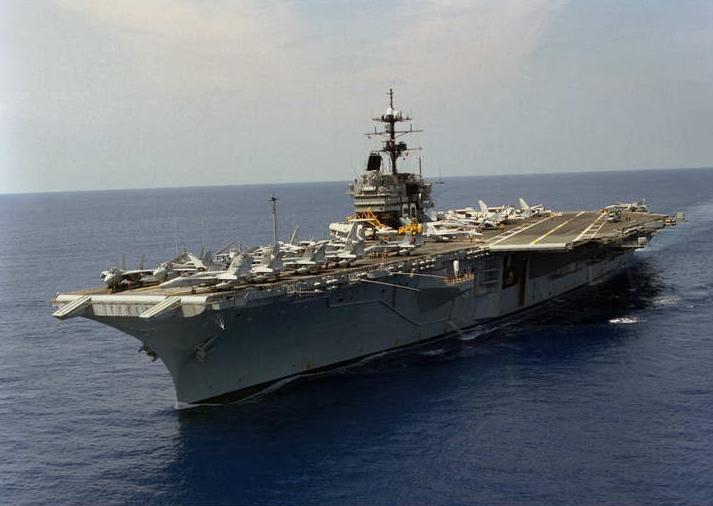
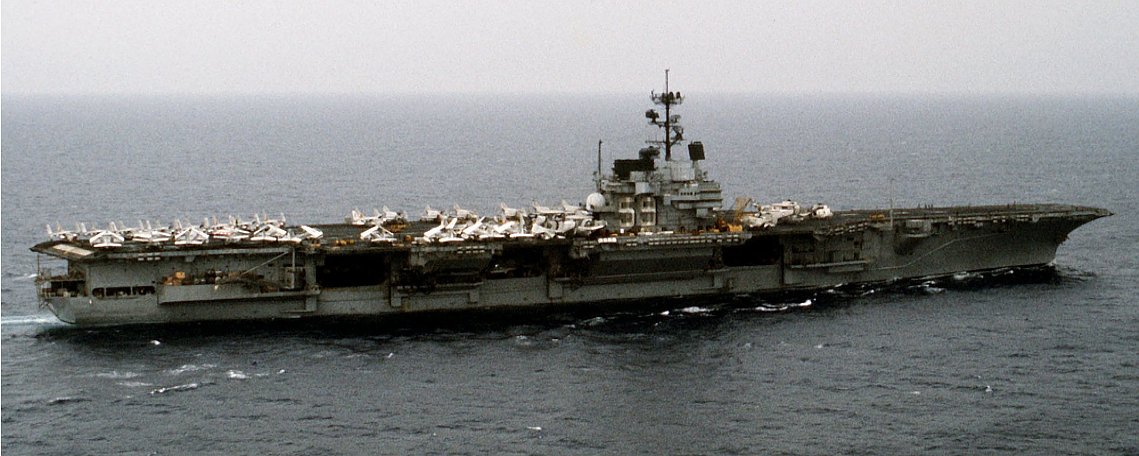
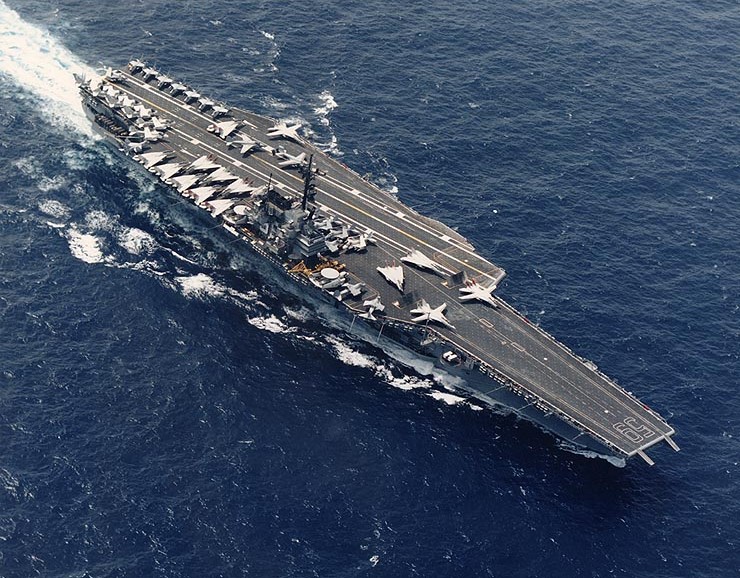
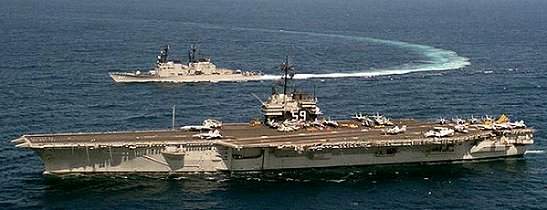
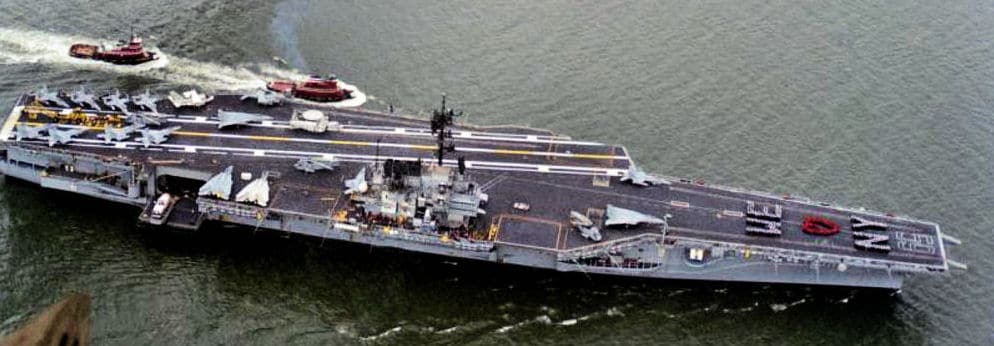
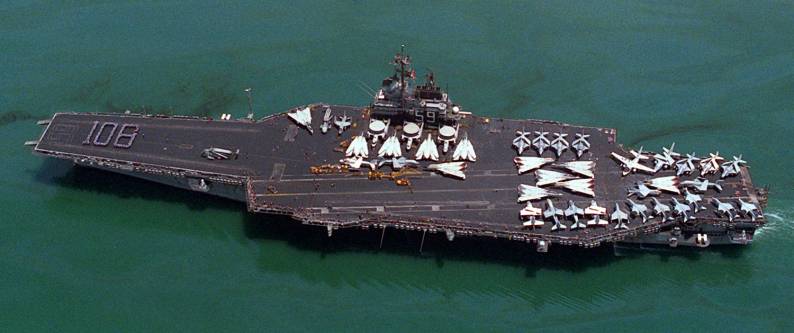

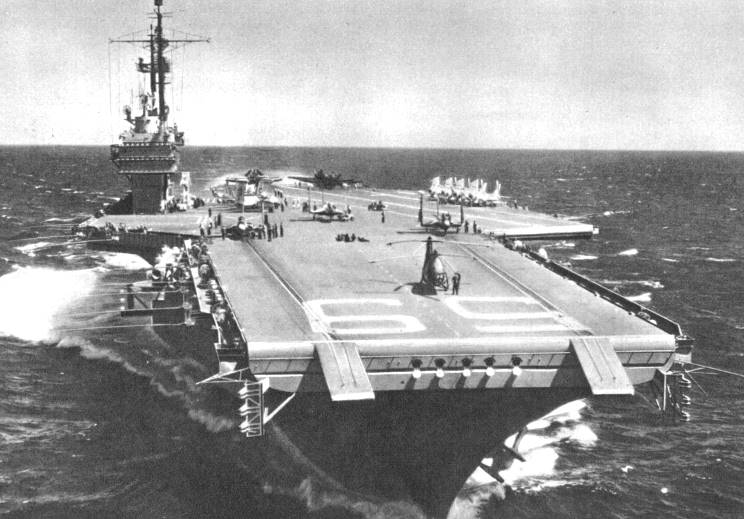


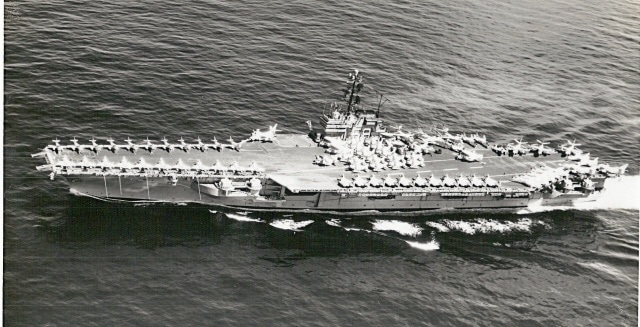
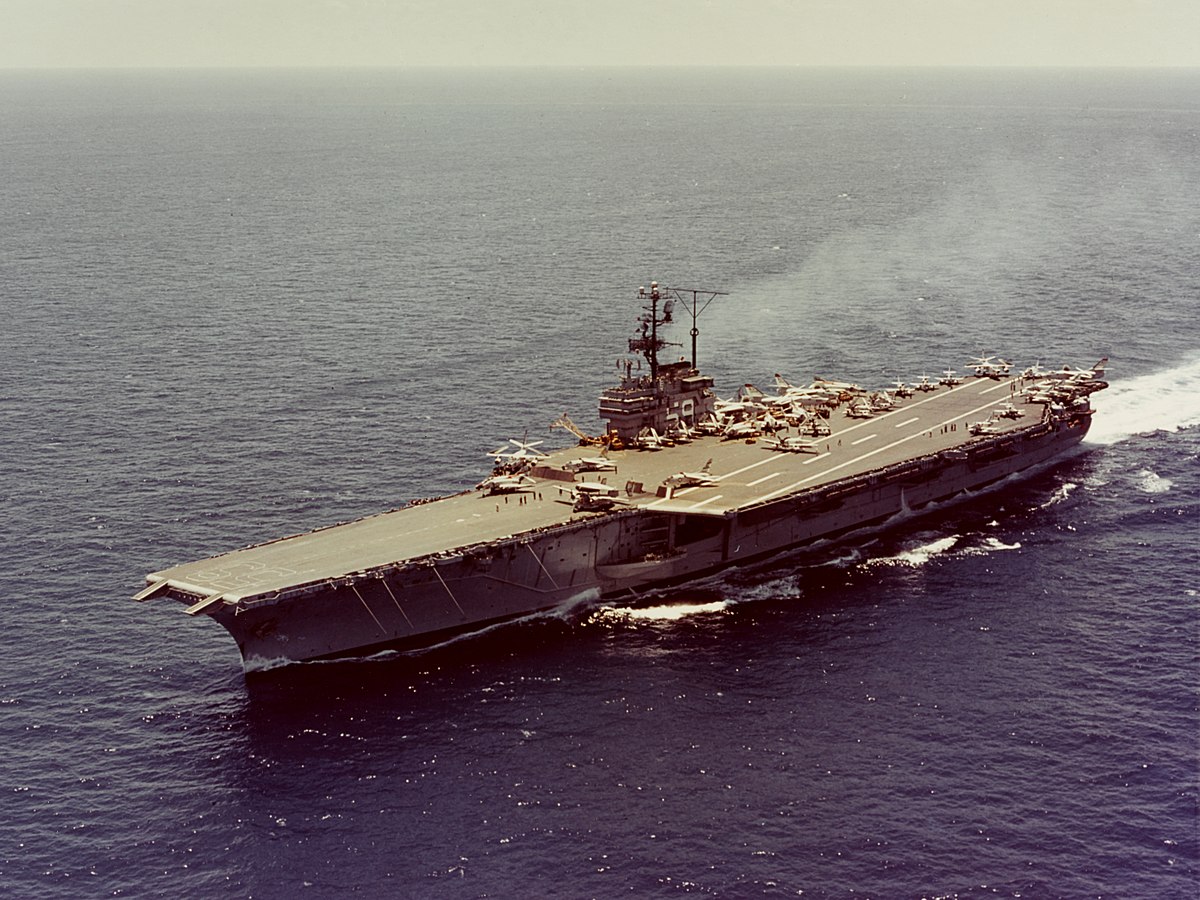
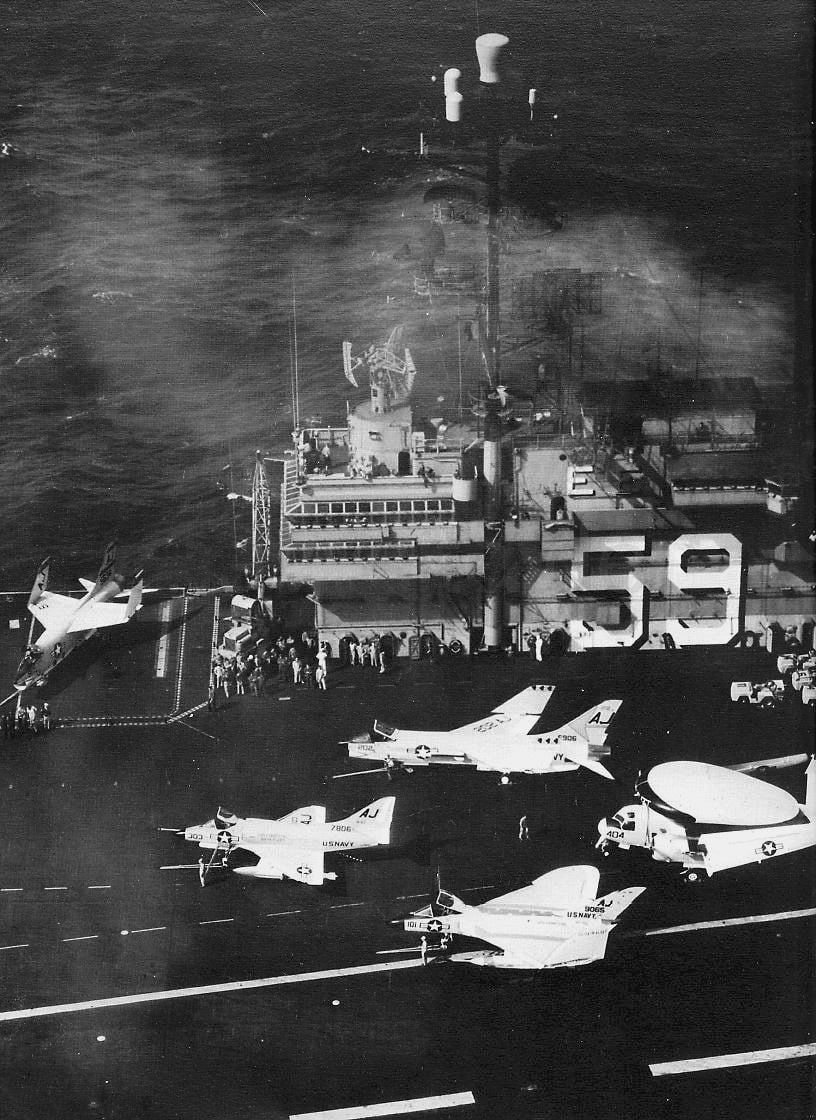
USS Forrestal (CV-59) Historical Overview
Origins and Construction
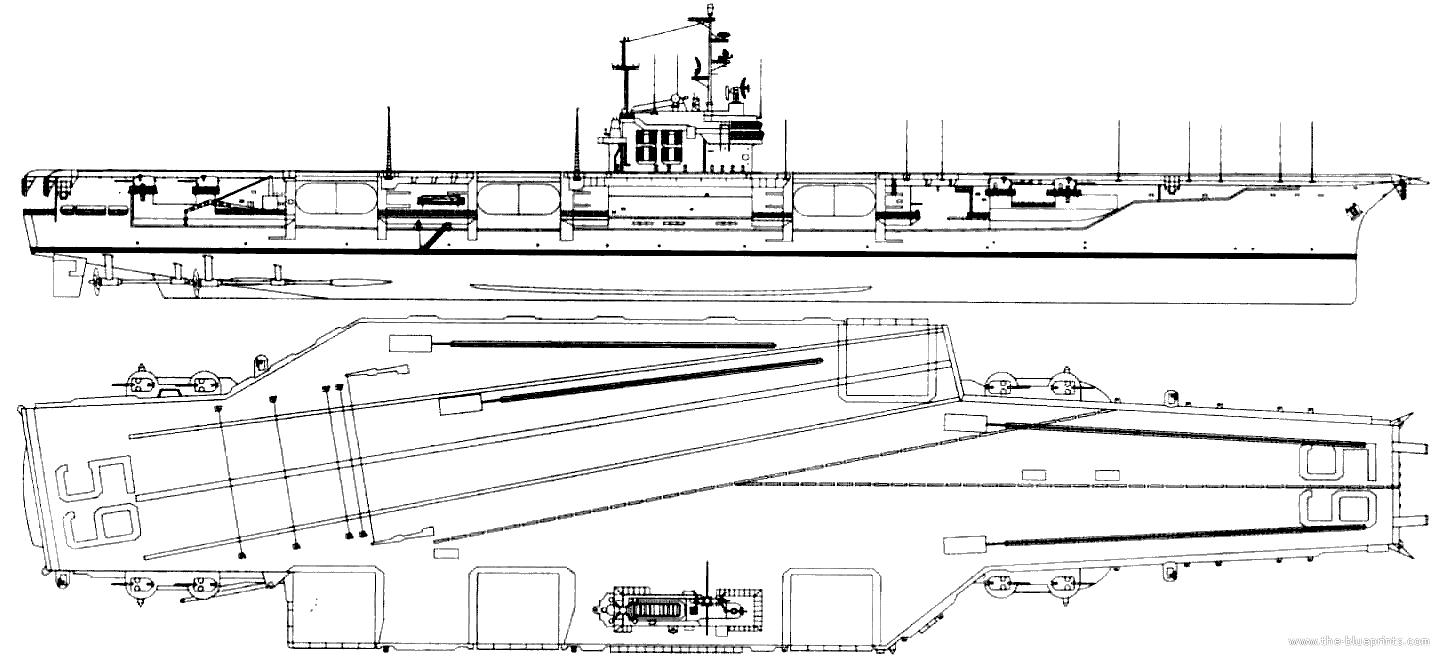
- Authorization and Design: The Forrestal was authorized in the Naval Appropriations Act of 1952 as part of a program to build large, modern aircraft carriers capable of supporting jet aircraft and heavy bombers. Named after James V. Forrestal, the first U.S. Secretary of Defense, it was the lead ship of the Forrestal-class carriers. The design aimed to create a "supercarrier" with a displacement of around 75,000 tons, far larger than World War II-era carriers, and included advanced features like an angled flight deck, steam catapults, and capacity for up to 90 aircraft.
- Construction: The keel was laid down on July 14, 1952, at Newport News Shipbuilding and Drydock Company in Virginia. The ship was launched on December 11, 1954, and commissioned on September 29, 1955, with Captain Roy L. Johnson as its first commanding officer.
- Specifications: At commissioning, Forrestal was 1,036 feet long, had a beam of 129 feet (flight deck 252 feet), and a full-load displacement of approximately 81,101 tons. It was powered by eight boilers and four geared steam turbines, producing 260,000 shaft horsepower, with a maximum speed of 33 knots. The ship carried a crew of about 4,000 (including air wing personnel) and was equipped with eight 5-inch guns (later reduced) and multiple anti-aircraft systems.
Early Service (1950s–1960s)
- Initial Operations: After commissioning, Forrestal underwent sea trials and shakedown cruises in the Atlantic and Caribbean. It joined the U.S. Second Fleet and later the Sixth Fleet in the Mediterranean, becoming a symbol of U.S. naval power during the Cold War.
- Mediterranean Deployments: Forrestal made regular deployments to the Mediterranean, supporting NATO operations and projecting U.S. presence amid tensions with the Soviet Union. Its first major deployment was in 1956, and it participated in exercises like Operation Strikeback (1957), a NATO exercise simulating defense against Soviet aggression.
- Technological Innovations: The carrier pioneered the use of jet aircraft like the F-4 Phantom and A-4 Skyhawk, adapting to the demands of high-performance aviation. Its large size and advanced systems allowed it to operate a diverse air wing, including fighters, bombers, and reconnaissance aircraft.
The 1967 Fire
- Catastrophic Incident: On July 29, 1967, while operating in the Gulf of Tonkin during the Vietnam War, Forrestal suffered one of the deadliest accidents in U.S. naval history. A Zuni rocket on an F-4 Phantom misfired due to an electrical surge, striking an A-4 Skyhawk. This ignited a fire that spread to bombs and fuel, causing massive explosions.
- Impact: The fire killed 134 sailors, injured 161, and destroyed 21 aircraft. The ship sustained severe damage to its flight deck and internal compartments. The crew’s heroic response, including damage control efforts, saved the ship from sinking, but the incident exposed deficiencies in ordnance handling and firefighting procedures.
- Aftermath: Forrestal returned to Norfolk, Virginia, for extensive repairs, which took seven months and cost $72 million (equivalent to over $500 million today). The Navy implemented sweeping safety reforms, including improved firefighting training and stricter ordnance protocols, influencing carrier operations to this day. The tragedy also gained attention due to the survival of Lieutenant Commander (later Senator) John McCain, who narrowly escaped the fire.
Later Service (1970s–1990s)
- Vietnam and Beyond: After repairs, Forrestal returned to service in 1968, continuing Vietnam War operations with Carrier Air Wing 17. It conducted multiple deployments to the Mediterranean and Atlantic throughout the 1970s, supporting U.S. foreign policy during events like the Yom Kippur War (1973) and the Iranian Hostage Crisis (1979–1981).
- Modernizations: The carrier underwent several refits, including a major overhaul from 1983 to 1987, which upgraded its radar, electronics, and aircraft-handling systems. However, its older design made it less efficient than newer Nimitz-class carriers, leading to discussions about its retirement.
- Cold War Role: Forrestal played a key role in NATO exercises, such as Ocean Safari (1985), and was a deterrent against Soviet naval forces. It also supported operations in the Middle East, including the Persian Gulf during the Iran-Iraq War.
Decommissioning and Legacy
- Final Years: By the late 1980s, Forrestal was aging, and its high operating costs prompted the Navy to plan its retirement. It was redesignated as a training carrier (AVT-59) in 1992, briefly serving to train aviators before being fully decommissioned on September 11, 1993, at Philadelphia Naval Shipyard.
- Disposal Efforts: After decommissioning, Forrestal was stricken from the Naval Vessel Register in 1998. Attempts to preserve it as a museum ship failed due to funding and logistical challenges. In 2013, the Navy sold the ship for one cent to All Star Metals in Brownsville, Texas, for scrapping. The scrapping process was completed by 2015.
- Legacy: The Forrestal set the standard for modern supercarriers, influencing the design of subsequent classes like the Kitty Hawk and Nimitz. Its 1967 fire led to critical safety improvements across the Navy. The ship’s service spanned major Cold War events, and its air wings flew over 300,000 sorties during its career. Despite its scrapping, Forrestal remains a significant part of naval history, remembered for its pioneering role and the resilience of its crew.
Notable Facts
- Firsts: Forrestal was the first U.S. carrier designed specifically for jet aircraft and the first to exceed 1,000 feet in length.
- Nickname: Known as the “Zippo” or “Forrest Fire” after the 1967 fire, a nod to its flammability in jest.
- Aircraft: Over its career, it operated aircraft like the F-14 Tomcat, A-6 Intruder, and E-2 Hawkeye, adapting to evolving aviation technology.
Hisotry sourced from GROK